The Blue River Hidden Beneath Tenorio Volcano’s Rainforest
Download Travel Details >PRIVATE & SMALL GROUP TOURS TO THE WORLD'S BEST DESTINATIONS
Ready To Join Us For An Adventure In Costa Rica!


Find the Blue River Inside Tenorio Volcano's Forest
Rio Celeste runs an improbable turquoise blue through the rainforest of Tenorio Volcano National Park, a color so saturated that early visitors assumed it had to be artificial. It isn't. The river's hue comes from a genuine physical phenomenon in the water itself, one that took scientists years to properly explain, and the explanation turned out to be more interesting than any of the legends that preceded it.
A team of Costa Rican researchers published the definitive study in the peer-reviewed journal PLOS ONE in 2013, and their findings ruled out dissolved minerals or dye entirely. The park's official page, maintained by SINAC, protects both the river and the surrounding rainforest that visitors hike through to reach it.
The First Glimpse of Rio Celeste
The trail to Rio Celeste follows regular rainforest stream color for its first stretch, unremarkable brown and green water typical of lowland Costa Rica. The transformation happens suddenly, at a specific point where two colorless streams converge, and the water shifts to vivid blue within a matter of feet. Travelers who know to watch for this convergence point, known locally as Los Tenideros, get to witness the color change happening in real time rather than simply arriving at water that is already blue.
Why the Water Appears Blue
The 2013 study identified the cause as Mie scattering, the same physical principle that makes the sky appear blue, produced by tiny aluminosilicate particles suspended in the water. Researchers found that the Rio Buenavista, one of the two streams that form Rio Celeste, carries these particles at a small enough size to stay colorless. When it mixes with the more acidic Quebrada Agria, the change in pH causes the particles to clump together into larger clusters, and that larger particle size is what scatters light into the intense blue visitors see. The researchers even modeled the scattering mathematically and found the simulated color matched the river's actual appearance closely.
Chemical testing during the study specifically ruled out dissolved copper, cobalt, or any other colored mineral as the cause, closing the door on theories that had circulated for years before the research was conducted. The color is entirely a matter of physics, not chemistry, a distinction that surprises most visitors who assume some kind of dissolved mineral must be responsible. Our guide to Costa Rica's volcanoes covers Tenorio alongside the country's other volcanic parks, several of which offer their own unusual geological features worth comparing.
The Trail Through Wet Tropical Forest
Reaching Rio Celeste requires a hike of a few miles round trip through humid, low-elevation rainforest, with a mix of packed dirt, boardwalk, and stairs along the steeper sections near the waterfall. The trail stays shaded for most of its length, though humidity remains high throughout regardless of canopy cover. Volcanic activity from Tenorio also shows up along parts of the trail, with small bubbling hot springs and a mud pot visible for travelers who pay attention to the ground rather than only the forest canopy overhead.
Our guide to an Arenal volcano hiking adventure covers a nearby region often paired with a Tenorio visit, since the two parks sit close enough together to combine into a single day for travelers based in the Arenal area.
Waterfalls, Heat, and Sudden Rain
Rio Celeste's waterfall, where the blue river drops into a churning pool below, ranks among the most photographed spots in Costa Rica. Swimming is not permitted at the waterfall itself or within most of the park's boundaries, though sections of the river outside the park allow visitors to swim in the same striking blue water under less restrictive rules.
Rain arrives with little warning in this region even during the dry season, and the trail can turn slick quickly once a shower passes through. Our packing guide covers what to bring for Costa Rica's climate, worth reviewing specifically for the footwear and rain protection this trail rewards.
Wildlife Beyond the River
Tenorio's rainforest supports tapirs, pumas, and a wide range of birds, though the park's dense vegetation and the trail's focus on reaching the river mean most visitors see far less wildlife here than at parks built more directly around wildlife viewing. Howler monkeys and various frog species are the most consistently encountered animals along the main trail, active enough that a slow pace tends to reward patient hikers with at least a few sightings along the way.
Our overview of ecotourism activities across Costa Rica covers a few parks better suited to wildlife-focused travelers, useful context for anyone deciding how much of a limited itinerary to dedicate to Tenorio specifically.
Photographing Color Without Overprocessing It
Rio Celeste's blue is intense enough in person that heavy saturation editing often makes photographs look artificial rather than accurate. A polarizing filter cuts glare off the water's surface and tends to do more for image quality here than any amount of post-processing color adjustment, since it reveals detail beneath the surface that a flat, glare-covered shot simply cannot capture.
Overcast conditions, common in this region, actually flatter the river's color more than harsh direct sun, which can wash out the saturation that makes Rio Celeste distinctive in the first place. Shooting on a cloudy morning often produces a more accurate, more striking result than waiting for clear skies.
Walk Through Tenorio's Forest to the Blue River
Rio Celeste remains one of the clearer examples in Costa Rica of a natural phenomenon that sounds almost too striking to be real, verified by genuine scientific research rather than left as local legend. The hike through Tenorio's rainforest to reach it adds context that a quick photo stop alone would miss entirely.
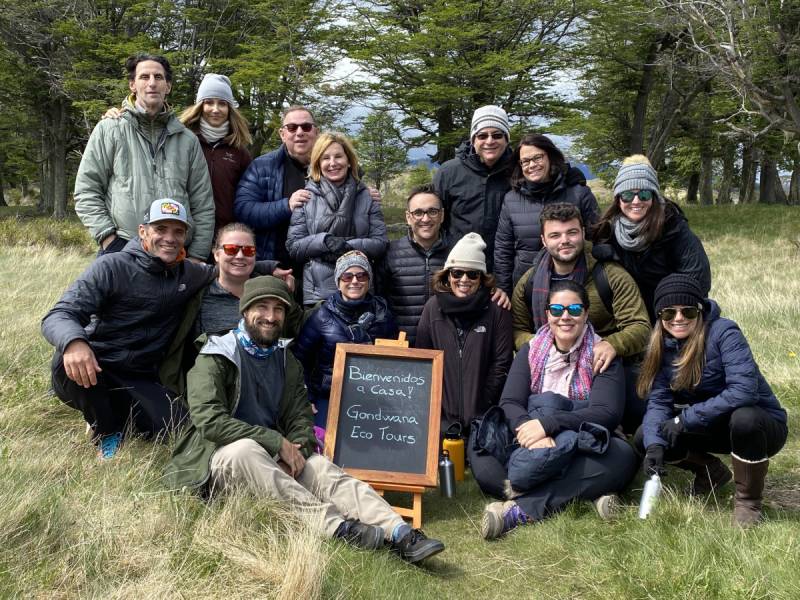
Gondwana Ecotours can build a stop at Tenorio into a broader northern Costa Rica itinerary alongside Arenal, connecting this stop to the same conservation approach outlined on our sustainability page. Our broader look at ecotourism in Costa Rica covers how stops like this one fit into a well-rounded itinerary.
For more details about what is included in our itineraries, please visit our tour pages before booking.
Weather and trail conditions shape how clearly Rio Celeste's color shows on any given day. Download our travel details for the most accurate picture of what the Costa Rica: Secluded Wildlife Adventure itinerary actually includes.