Life in the Mist of Costa Rica’s Cloud Forests
Download Travel Details >PRIVATE & SMALL GROUP TOURS TO THE WORLD'S BEST DESTINATIONS
Ready To Join Us For An Adventure In Costa Rica!


Discovering Life in the Mist of Costa Rica's Cloud Forest
Costa Rica's cloud forests occupy a narrow band of high elevation where moisture-laden air condenses into near-constant mist, creating conditions found in only a small fraction of the world's forests. That mist supports a wildlife community genuinely different from the lowland rainforest most travelers picture when they think of Costa Rica, one built almost entirely around moisture rather than heat.
The Monteverde Cloud Forest Preserve has documented this ecosystem in detail since the 1970s, and the Instituto Costarricense de Turismo highlights cloud forest destinations across several regions of the country, not just Monteverde, as some of Costa Rica's most distinctive wildlife viewing, each shaped by the same basic moisture-driven ecology despite sitting in different mountain ranges.
What Makes a Cloud Forest Different
Cloud forests form where mountain elevation intercepts moisture-laden trade winds, causing near-constant condensation that keeps humidity extremely high regardless of season. That moisture supports plant and animal life adapted specifically to these conditions, distinct enough from lowland rainforest species that the two ecosystems share surprisingly little overlap despite sitting in the same country, sometimes within a few hours' drive of each other.
Temperature also sets cloud forest apart, staying noticeably cooler than lowland Costa Rica year round, cool enough that many first-time visitors pack entirely wrong for the climate shift, arriving with lightweight clothing built for the coast rather than the highlands.
Quetzals Among Wild Avocado Trees
The resplendent quetzal draws more attention than any other cloud forest species, feeding primarily on aguacatillo fruit, a wild relative of the avocado, and nesting during the early dry season when males display their spectacular tail feathers most actively. Multiple cloud forest regions across Costa Rica support healthy quetzal populations, not just the country's most famous reserve, giving travelers more than one option for timing a sighting around this single species.
Our Monteverde birdwatching guide covers quetzal timing and behavior in more depth for travelers building a trip around this single species.
Hummingbirds at the Forest Edge
Cloud forest edges, where sunlight reaches flowering plants more directly than under full canopy, concentrate hummingbird activity more reliably than the darker forest interior. Dozens of species occupy Costa Rica's various cloud forest regions, each adapted to slightly different flower shapes and elevations, with beak length and shape often matching a specific flower type closely enough to function almost like a lock and key.
Our broader birdwatching guide covers hummingbird behavior across Costa Rica's different elevations, useful for comparing cloud forest species against those found in warmer lowland habitat.
Amphibians in Constant Moisture
Cloud forest humidity supports amphibian diversity that drier ecosystems simply cannot match, with frogs and salamanders occupying nearly every available damp surface from leaf litter to bromeliad pools collecting rainwater in the canopy. Many species remain active during the day here, unlike the more strictly nocturnal amphibians found in lowland rainforest, since the constant moisture removes much of the drying risk that pushes lowland species toward nighttime activity instead.
This amphibian richness has also made cloud forest regions a priority for conservation research, since several species found here exist nowhere else and remain acutely sensitive to even small shifts in temperature and moisture.
Epiphytes Covering Every Branch
Nearly every tree trunk and branch in a mature cloud forest carries some combination of orchids, bromeliads, mosses, and ferns growing directly on the host tree rather than in soil. Monteverde alone holds more orchid species than almost anywhere else on Earth, a density of epiphyte growth that visibly distinguishes cloud forest from any other ecosystem in the country, with some trees supporting dozens of separate epiphyte species at once.
Our overview of ecotourism activities across Costa Rica covers a few cloud forest destinations where this epiphyte density is easiest to appreciate up close.
Photographing Through Mist and Dripping Leaves
Cloud forest's constant moisture is genuinely hard on camera gear, and a simple rain cover or dry bag earns its space in any daypack brought into this environment. The diffused, even light that mist creates actually flatters photography, softening shadows in a way direct sun in lowland forest rarely allows.
Our packing guide covers what to bring for Costa Rica's climate, worth reviewing specifically for the waterproof protection cloud forest conditions demand more consistently than almost anywhere else in the country.
Climb into Costa Rica's Cloud Forest and Walk Through the Mist
Costa Rica's cloud forests hold a wildlife community built entirely around moisture, quetzals, hummingbirds, amphibians, and epiphytes all shaped by the same near-constant mist that defines this ecosystem. Few places in the world compress this much specialized biodiversity into such a narrow elevation band.
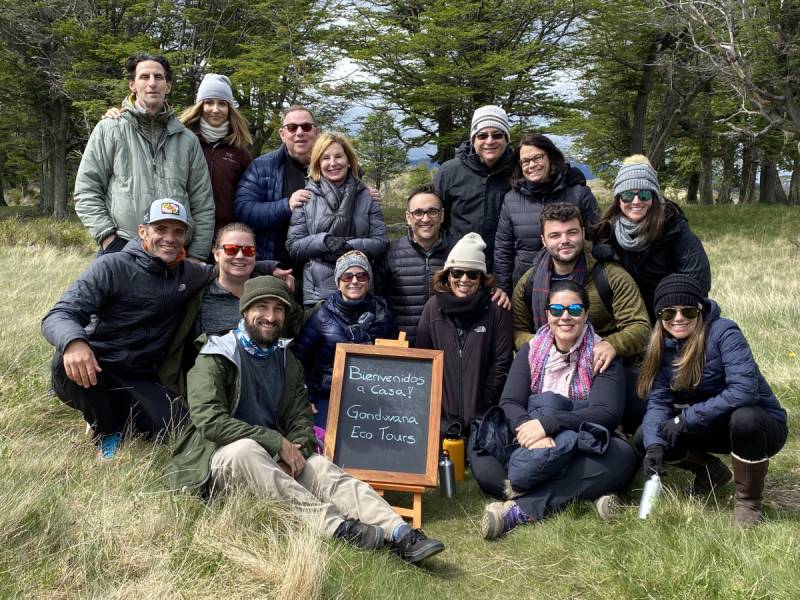
Gondwana Ecotours pairs cloud forest excursions with naturalist guides trained to read this specific environment, following the standards outlined in our Animal Welfare Policy. Our broader look at ecotourism in Costa Rica covers how cloud forest conservation connects to the country's wider approach, one that treats these high-elevation ecosystems as some of the most fragile in the entire national park system.
For more details about what is included in our itineraries, please visit our tour pages before booking.
Wildlife sightings are never guaranteed, even in a forest as dense as this one, but patience and the right season improve the odds considerably. Download our travel details for the most accurate picture of what the Costa Rica: Secluded Wildlife Adventure itinerary actually includes.