Costa Rica Small Group Tours: A More Personal Way to Explore
Download Travel Details >PRIVATE & SMALL GROUP TOURS TO THE WORLD'S BEST DESTINATIONS
Ready To Join Us For An Adventure In Costa Rica!


Fewer Travelers, Closer Encounters: The Difference a Small Group Makes in Costa Rica
Group size sounds like a comfort question and in Costa Rica it is mostly a logistics and wildlife question. The country's best experiences run on hard caps: permits limited per station, night walks held to single figures, nesting beaches releasing visitors in timed batches, canal boats and small aircraft with fixed seats. A tour's group size determines which of those it can do at all.
What Defines a Small Group Tour
There is no industry standard, which is why the phrase gets used loosely. In practice the meaningful thresholds in Costa Rica are set by the activities rather than by marketing.
Guided night walks cap at roughly eight to ten. Nesting turtle tours run in groups of around ten with timed releases. Corcovado enforces guide-to-visitor ratios per station. Canal boats in Tortuguero typically seat ten to twenty. Domestic aircraft to the Osa seat roughly twelve to fourteen with strict baggage weight limits.
A tour running twelve to sixteen people clears most of those. A tour running thirty splits into two groups for the good activities, which means two guides, two boats, and a different experience depending on which half you are in. Worth asking directly rather than inferring from the brochure.
Benefits of Traveling with Fewer People
The gains are concrete rather than atmospheric.
Movement is faster. A group of ten boards a boat, clears a bathroom stop and assembles at a trailhead in a fraction of the time thirty people take, and in a country where the productive wildlife hours run from first light to about eight in the morning, that compounds daily.
Access widens. Small lodges near protected land typically hold eight to twenty rooms, because that is what the sites and access roads support. A smaller group fits inside them; a larger one has to stay further from the habitat and drive in.
And the guide is reachable. Questions get answered when they occur rather than being relayed from the back of a column, which matters more than it sounds when the subject in front of you is moving.
Wildlife Viewing in Smaller Groups
This is where group size stops being a preference and starts changing outcomes.
Rainforest animals respond to noise and movement before they respond to people. Sixteen sets of boots on leaf litter clear the understorey ahead of the group, which is why the back half of a large column reliably sees less than the front. Two guided groups of eight consistently outperform one group of sixteen on the same trail.
Positioning matters too. When a guide locates a sloth or a trogon, everyone needs a sightline through the same gap in the canopy. Ten people rotate through that in a couple of minutes. Thirty do not, and the animal frequently moves first.
The same applies on water. A boat quiet enough to drift produces herons, caimans and monkeys along the bank; a full boat with constant movement does not. Viewing technique generally sits on the rainforest wildlife page.
Transportation and Accommodations
Vehicle size decides where a tour can physically go. Minivans carry six or seven, minibuses ten to fifteen, full coaches twenty or more. The road into Monteverde, the tracks across the Osa Peninsula and most lodge access roads are unsuitable for a full coach, so larger tours either transfer to smaller vehicles or quietly drop those destinations from the itinerary.
Water and air impose their own limits. The boat to Tortuguero runs on a schedule with fixed capacity, as the how to get to Tortuguero page explains, and reaching the Osa by air means flying in waves if the group is large.
On lodging, the properties closest to good habitat are small by necessity. Ecolodges bordering national parks run on solar and generators with limited power hours, and room counts reflect what the site supports. A group that fits one of those sleeps where the wildlife is. A group that does not sleeps in town.
Meeting Fellow Travelers
A group of a dozen people functions as a group. A group of thirty becomes several, and most travelers end up in one of them rather than in the whole.
Shared meals are where this plays out. A single table holds a conversation; four tables hold four. Over eight days the difference is substantial, particularly for solo travelers and for anyone whose trip involves early starts and shared boats.
Pacing also shifts. Smaller groups absorb a change of plan when weather closes a trail or a boat cancels, because the whole group can be rerouted in one decision rather than in a round of consultation.
Small Group vs. Large Group Tours
Large tours have genuine advantages: lower per-person cost, fixed departures on more dates, and more predictable logistics. For a city-based or coach-based itinerary, those matter.
For wildlife travel in Costa Rica they work against the product. The permit caps, boat capacities and lodge sizes described above are not incidental. They exist because the habitat and the animals cannot absorb volume, which is also why entry to Corcovado National Park runs on certified guides and daily limits under SINAC rules.
Keeping groups small is also lower impact on trails and on the animals themselves, which is the overlap between a better trip and a defensible one. The responsible travel page covers that side.
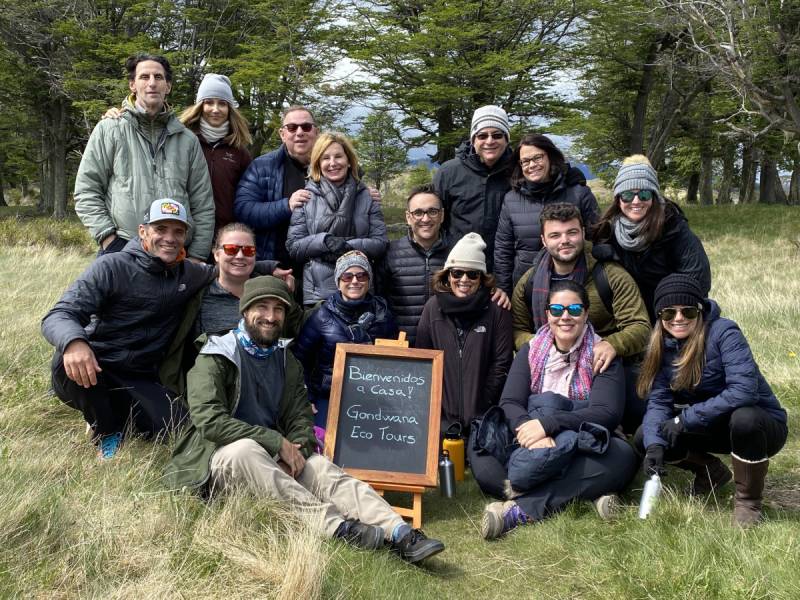
The eight-day Costa Rica wildlife adventure tour from Gondwana Ecotours is built on that principle, keeping group sizes deliberately small while exploring the Osa Peninsula, Corcovado and Arenal on foot and by boat with local Costa Rican guides, including a private boat tour of Caño Island and accommodation at Corcovado Wilderness Lodge.
Choosing Your Costa Rica Adventure
Ask for the maximum group size rather than the typical one, and ask whether the group splits for capped activities. Those two answers tell you more about the trip than the destination list does. Travelers organising their own party will find related considerations on the group trip planning page.
A small group improves the odds and does not fix them. Animals still keep their own hours, a quiet trail can produce nothing, and weather closes boats and trails regardless of how many people were booked on them. What fewer travelers changes is how much noise precedes you, how quickly the group moves at first light, and whether you can sleep inside the habitat instead of driving to it. Group sizes, the destinations each departure covers and what the daily schedule involves are set out in the Costa Rica tour brochure on the Costa Rica wildlife adventure tour page.