Alaska is famous for its brown bears and is undoubtedly one of the best places in the world to see them. Every summer, wildlife watchers are drawn to the state to witness these incredible creatures in their natural habitat.
Home to over 98% of the U.S. brown bear population, Alaska has one of the highest bear densities in the world. Alaska is home to three species of bears: brown bears, black bears, and polar bears. In this blog, we’re going to focus on the best bear viewing in Alaska for those who want to see brown bears.
If you’re thinking of going on a bear viewing tour, this blog has everything you need to know about the best bear viewing in Alaska: where to go, when to go, what to expect, and how to enjoy bear viewing safely.
Where is the best bear viewing in Alaska?
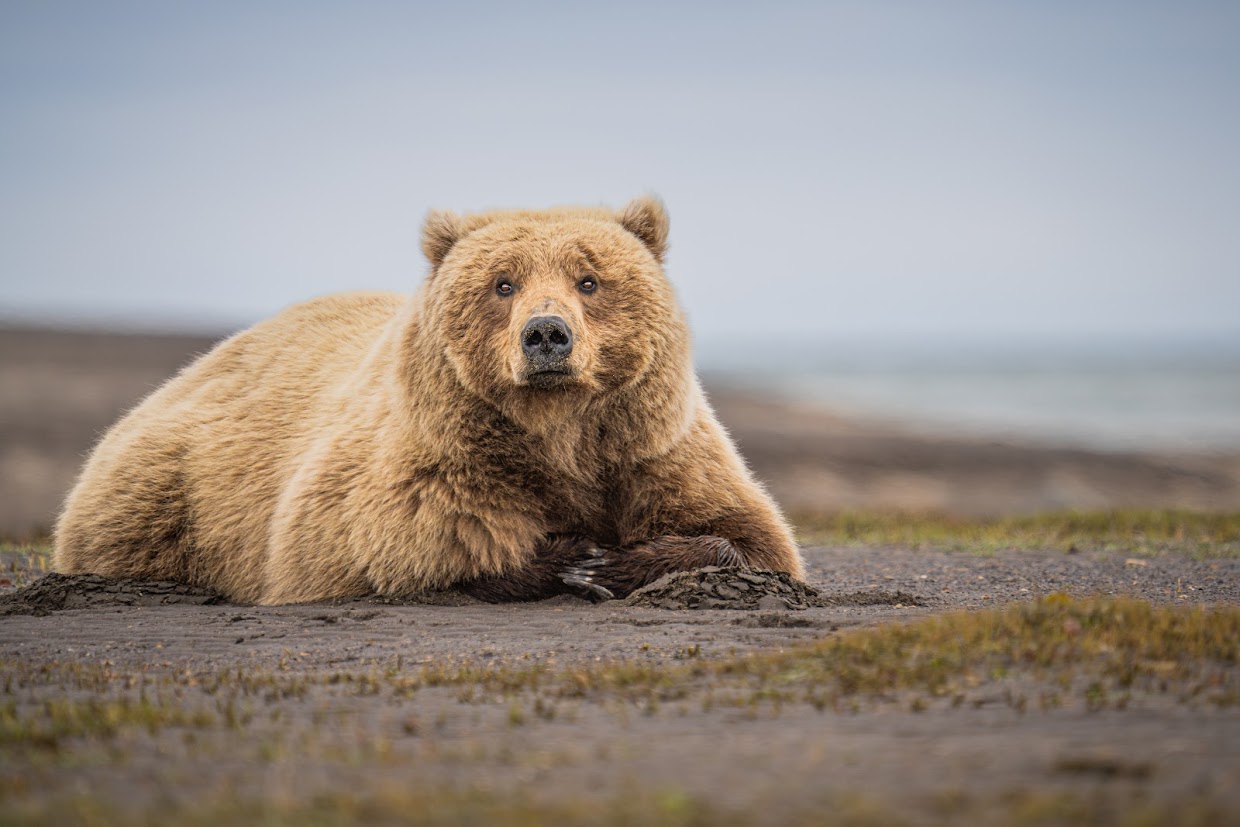
Brown bears inhabit most of Alaska, and there is always a chance you may be lucky enough to see one on a hillside or even walking down a road. However, if you want the best chance to see a brown bear while you’re in Alaska, it’s best to travel to a specific location that is known for bear sightings. You also increase your chances by joining a guided experience, where you have an expert around to help you.
Locations for the best bear viewing in Alaska include Katmai National Park, home to spots like Brooks Falls, Moraine Creek, and Hallo Bay, as well as the adjoining Lake Clark National Park. Katmai and Lake Clark National Parks have the highest brown bear population density in the world, offering some of the best bear viewing in Alaska.
Bear Viewing in Katmai National Park
Katmai National Park offers exceptional opportunities for visitors to observe brown bears. During the salmon run, bears congregate around rivers in Katmai to feast on the fish as they head upstream to spawn. As well as bears, Katmai offers incredible views of valleys, lakes, and volcanoes—Alaska is the U.S. state with the highest number of active volcanoes!
Within Katmai National Park, locations including Brooks Falls, Moraine Creek, and Hallo Bay offer some of the best bear viewing in Alaska.
Bears Catching Salmon at Brooks Falls
Brooks Falls is a world-famous grizzly bear watching location. Nestled in the heart of Katmai National Park, perfectly placed viewing platforms provide an exciting spot to watch bears feed on salmon as they try to scale the waterfall. The rushing waters of the Brooks River are teeming with life as the salmon fight against the current and try to dodge the paws of the nimble, skillful bears who have gathered to feast on them. Guests can spend hours watching the bears feed, play, and interact at Brooks Falls, with plenty of opportunities to take photos from different viewpoints.
Bears Fishing for Salmon in Moraine Creek
Moraine Creek is a remote area of Katmai National Park, where bears fish in a winding river filled with salmon. Amidst the wilderness of the national park, visitors observe bears in a secluded, intimate setting. Moraine Creek offers a different, but equally fascinating, perspective on bear behavior.
Bears Clamming in Hallo Bay
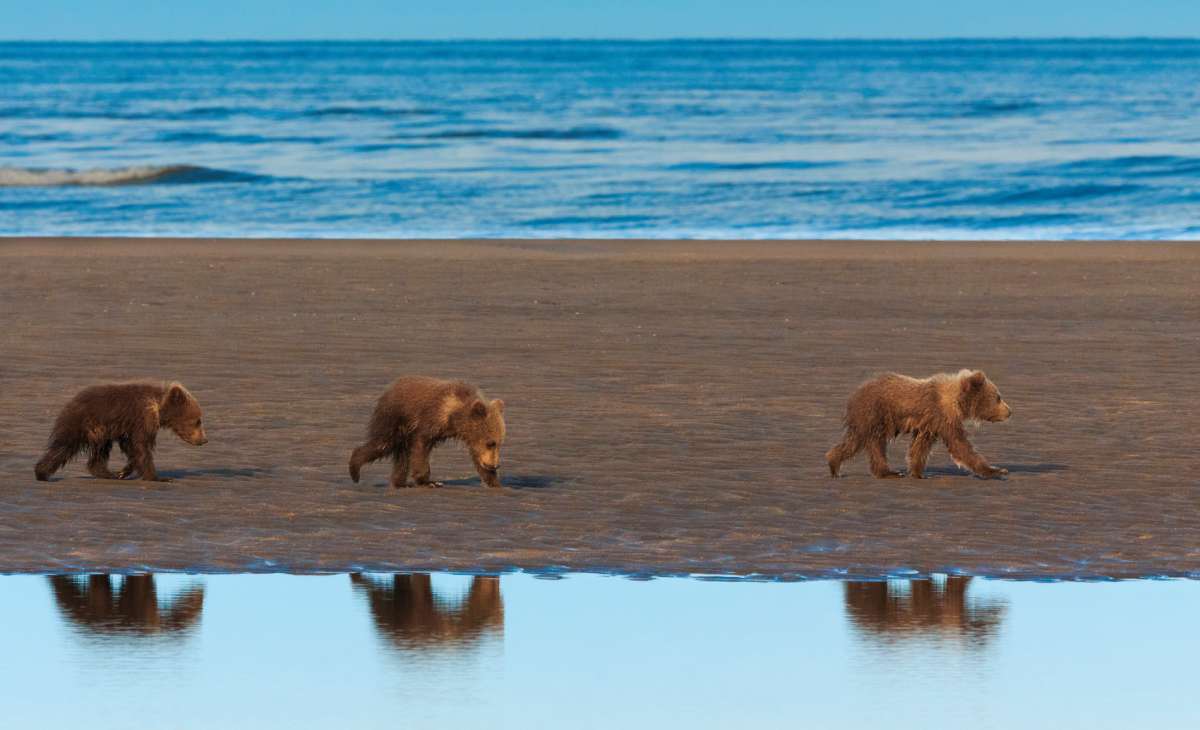
Hallo Bay sits on the eastern edge of Katmai National Park, on the coast of the Shelikof Strait. Here, bears roam and forage beneath breathtaking glaciers and volcanoes. These expansive coastal meadows and tidal flats are teeming with food for the bears: nutrient-rich sedge grasses, bright red salmon, and razor clams buried in the sand.
Bear Viewing in Lake Clark National Park
Lake Clark National Park is another fantastic spot to experience some of the best bear viewing in Alaska. Chinitna Bay is one of the most popular bear viewing spots in Lake Clark National Park, where, rather than catching salmon from rivers, the bears dig for clams along the shore.
What to Expect
When we take guests on bear-viewing experiences on our Glaciers and Grizzlies Adventure in Alaska, it is an unforgettable experience.
We start the day by getting kitted up with the equipment we need, which varies depending on where we’re going. For example, if we’re headed to Moraine Creek, we’ll wear waders to stay dry and comfortable on our adventure.
We travel to our bear-viewing locations by floatplane. This aerial perspective reveals the sheer scale of the Alaskan wilderness. From the plane, we can take in the views of snowcapped mountains, glistening glaciers, and rugged coastlines.
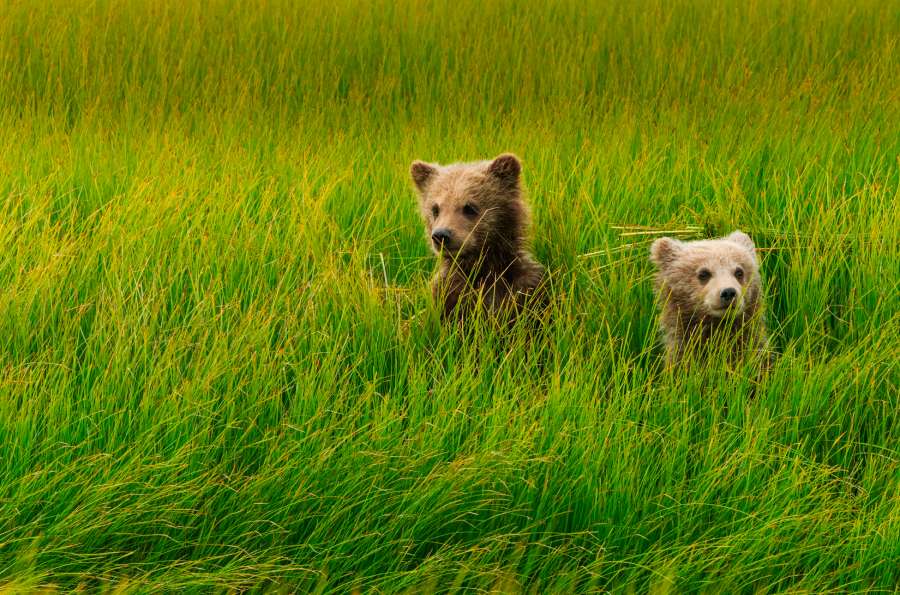
Once we’re on the ground, we watch the bears go about their daily lives from a safe distance. They graze on grass, snatch at salmon, and claw at clams in the sand. Mothers and cubs stick together as they roam, and we get to witness this magical bond while respecting their space.
Expert bear guides bring the experience to life. They share their knowledge and expertise, offering rich insights into bear behavior and helping keep us safe. We spend time watching, understanding, and connecting with Alaska’s majestic wildlife.
We walk across the landscape, usually between 2-4 miles over 4-5 hours, pausing at opportune moments for quiet observation. The terrain is uneven, but the pace is steady. There is plenty of time for photography and getting immersed in the wilderness. We’ll bring lunch with us.
Timing
The best time for bear viewing in Alaska is over the summer, because brown bears hibernate in the winter. They tuck themselves up in their dens, typically dug into hillsides, and their bodies go into hibernation; their heart rate drops, and their breathing slows down. The life cycle of brown bears is truly fascinating. During hibernation, they survive on their body fat. When they emerge in the spring, they set about regaining the body fat they used up over winter.
The salmon run in Alaska typically occurs from late May through to September, peaking in July and August. This is when grizzly bears in some parts of Alaska will be feeding on salmon.
Seasonal Variability
We choose our bear viewing location based on a variety of factors, including bear activity and safe flying conditions. We go where the bears are most active, which could be a salmon-rich stream, a beautiful beach, or an expansive coastal meadow.
Therefore, we cannot guarantee a specific destination ahead of time. However, the areas we may visit within Katmai National Park and Lake Clark National Park are all exceptional and offer some of the best bear viewing in Alaska. Choosing the location in real time ensures we’re in the right place, at the right moment, for the most rewarding experience possible.
Bear Safety
The safest way to view bears is to travel with an experienced bear guide. This ensures the thrilling experience of seeing bears up close with less risk. Our bear viewing experiences always begin with a briefing from an expert bear guide, who will teach you how to behave during your encounters. There are a few key things to remember, such as traveling in groups and storing food properly.
With preparation and respect, bear viewing in Alaska can be a safe, exciting, and rewarding experience. The wonder of watching these magical animals in their natural habitat is hard to forget.
Gondwana’s Glaciers & Grizzlies Adventure
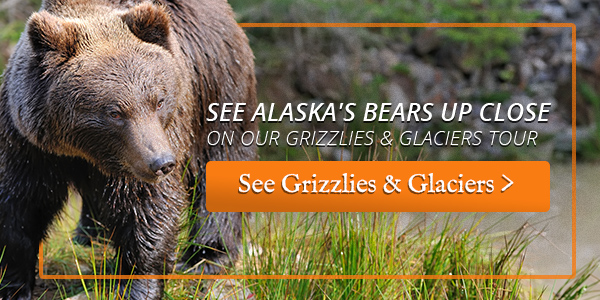
On our Glaciers & Grizzlies Adventure tours in Alaska, our guests take a chartered flight to watch grizzly bears. This is a quintessential Alaskan summer tour: a boat tour and kayaking in Kenai Fjords National Park, hiking tours, a tour of Exit Glacier, and, of course, an opportunity to experience the best bear viewing in Alaska. Get a front-row seat to see grizzly bears in the Alaskan wilderness.
Resources
https://www.adfg.alaska.gov/index.cfm?adfg=brownbear.printerfriendly