 The black rhino is a creature that is a familiar sight on TV and in movies. Most people can recognize their thick, wrinkled hides and curved horns instantly, and yet very few know much about them. These creatures are ancient—a relic from when the world was a little bit bigger and a little bit wilder. It’s easy to forget that they still roam the plains of sub-Saharan Africa, trying to find a way to cohabitate with their human neighbors. Unfortunately, when humans and rhinos clash, the rhinos usually end up on the losing end. Several different subspecies of rhino have recently become extinct in the wild and several more are critically endangered. The threat is real, but so are conservation efforts. Tourism, education, and the enforcement of anti-poaching laws has helped nearly double the population of black rhinos in the last 30 years. It’s a great start but the rhinos aren’t out of danger yet. At Gondwana Ecotours, we strive to promote responsible, sustainable travel in the hopes that it will preserve these animals and their habitat for future generations.
What are Black Rhinos?
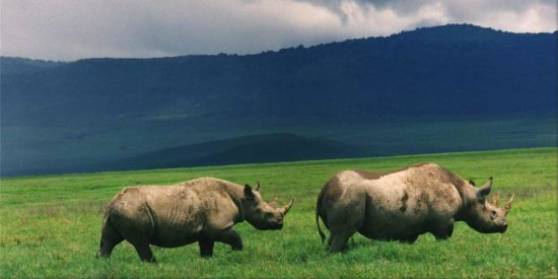 Rhinos are massive, solitary herbivores who have roamed the African savannas for millions of years. Their distinctive horns and thick skin are reminiscent of the ancient dinosaurs, a callback from the Earth’s prehistoric past. Currently, there are two species of rhinoceros on the African continent: the black rhino and the white rhino. In appearance, they’re very similar, and despite their names, they’re both actually the same shade of grey. There are a few notable differences, however. The black rhino is smaller (weighing only 3000 lbs compared to the white rhino’s 7000lbs) and it has a hooked lip that is perfect for browsing leaves and fruit from small trees and bushes. White rhinos, on the other hand, have a square jaw that’s more suited to grazing the tall grasses of the savanna.
The black rhino also has a fierce reputation for being territorial. When frightened they’re quick to charge, getting up to speeds of nearly 30 miles per hour. But they do have one good friend on the savanna. Red and yellow-billed ox-pecker birds like to perch precariously on their backs, eating pesky parasites and even warning them of approaching danger. You will rarely find one without the other as they spend the hottest part of the day lounging by the watering hole.
Is the Black Rhino Endangered?
One hundred fifty years ago, over one million rhinos roamed the Savannas of Africa. Today, less than 29,000 can be found in the wild, and only about 6,487 of those are black rhinos. They have no natural predators and the decrease in their numbers can be attributed to human actions. The loss of their natural habitat does play a role, but illegal poaching is the primary culprit. In some countries, rhino horns are highly valued and thought to have medicinal properties. A single horn can fetch up to 60,000 dollars per kilo on the black market. Between the years 1960 and 1995, black rhino populations decreased by 98 percent, leaving only around 2,500 left in the world. Several subspecies have gone completely extinct—most recently, the Western black rhino in 2011. The news isn’t all grim, however. While the black rhino is still listed as critically endangered, due to conservation efforts their population is making a slow but steady comeback.
Where Can I See Black Rhinos?
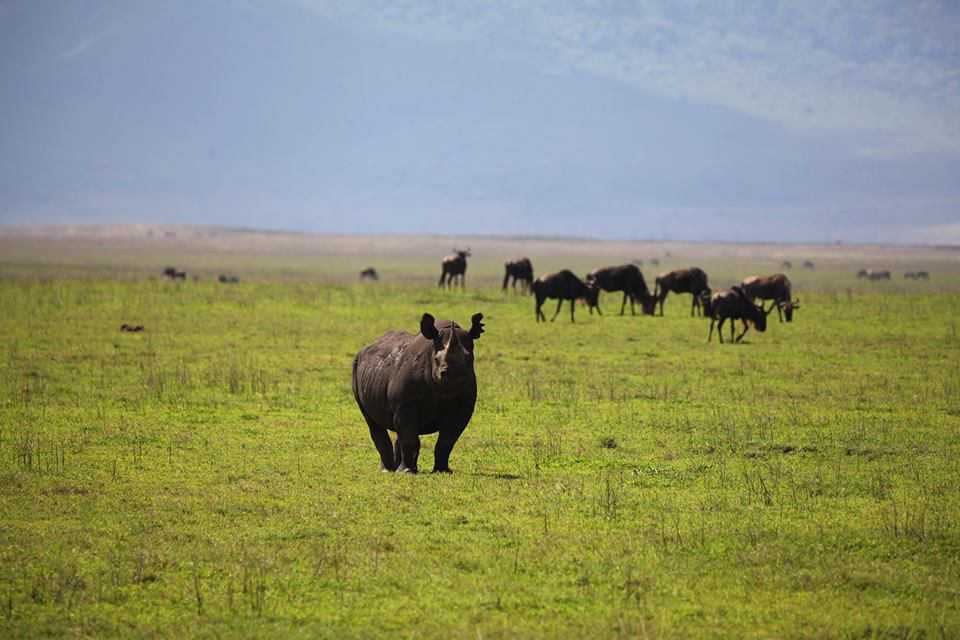 You might be able to visit a black rhino in a zoo, but there are only 60 living rhinos in 26 institutions in all of North America. These programs are important for breeding efforts, but they can’t always give you a real sense of how a rhino behaves in the wild. To see them in person, it’s better to travel to Tanzania and go on safari in one of their many national parks, most notably, the Ngorongoro Crater. It is the crater of an ancient volcano and the largest unbroken caldera in the world. It also boasts the densest population of black rhinos in all of Africa and it’s a popular stop on Gondwana Ecotours’ Great Migration Safari. Bringing awareness to the plight of the black rhino and allowing travelers to see them in their natural habitat is just one of our many goals in our efforts to promote responsible, sustainable and adventurous travel!
Travelers embarking on a safari in the Ngorongoro Crater not only get the chance to witness the majestic black rhinos in their natural habitat but also immerse themselves in the breathtaking landscapes and diverse wildlife of Tanzania. As they traverse the vast savannahs and encounter various species under the African sun, the experience becomes not just an adventure, but a profound connection to nature and conservation efforts. Supporting ecotourism initiatives like the Great Migration Safari not only opens doors to unforgettable experiences but also contributes to the preservation of endangered species like the black rhino and the protection of their vulnerable ecosystems. It’s through these meaningful interactions and experiences that travelers can truly appreciate the importance of sustainable travel practices and the significance of safeguarding our planet’s precious wildlife for generations to come. The opportunity to witness the raw beauty of the Ngorongoro Crater is not only a visual spectacle but a spiritual awakening, where the harmony between nature and wildlife beckons travelers to reflect on the importance of conservation and foster a deep respect for the fragile ecosystems that support these magnificent creatures.