The Serengeti. The name alone conjures up an image of vast herds thundering across boundless savannas under the beating African sun. In fact, in the Maasai language, Serengeti means “endless plains”.
But those savannas are not endless, and the herds are shrinking. The Serengeti, though still magnificent, faces an uncertain future as increasing threats jeopardize its unique wildlife and landscapes.
So what makes this landscape so extraordinary? And what are the issues it’s facing? Read on to learn about tourism in the Serengeti.
The Serengeti-Mara Ecosystem
The Serengeti is the largest national park in Tanzania and also the name of an administrative district. Often, when the term Serengeti is used, people are referring to the Serengeti-Mara ecosystem, which encompasses the Serengeti National Park in northern Tanzania and the Maasai Mara National Reserve in southwestern Kenya.
The Serengeti is recognized as a UNESCO World Heritage Site due to its global importance for biodiversity. 40,000 square kilometers of savannas, woodlands, grasslands, thickets, and river systems make up the ecosystem. Together, these habitats support one of the world’s most famous and fascinating movements of wildlife: the Great Migration.
The Serengeti-Mara ecosystem is home to wildlife and human communities who have deep-rooted connections to the land. The ecosystem is the major driver of tourism in this region, which can bring many benefits. However, there is an ongoing effort to manage the balance between wildlife conservation, tourism, and the local communities that rely on the land.
Why is the Serengeti-Mara ecosystem important?
The Serengeti-Mara ecosystem is home to a diverse array of quintessential African species, with one of the highest concentrations of large mammal species in Africa. These include the Big Five (elephants, rhinos, lions, leopards, and Cape buffaloes) as well as hyenas, giraffes, cheetahs, and other icons of the savanna.
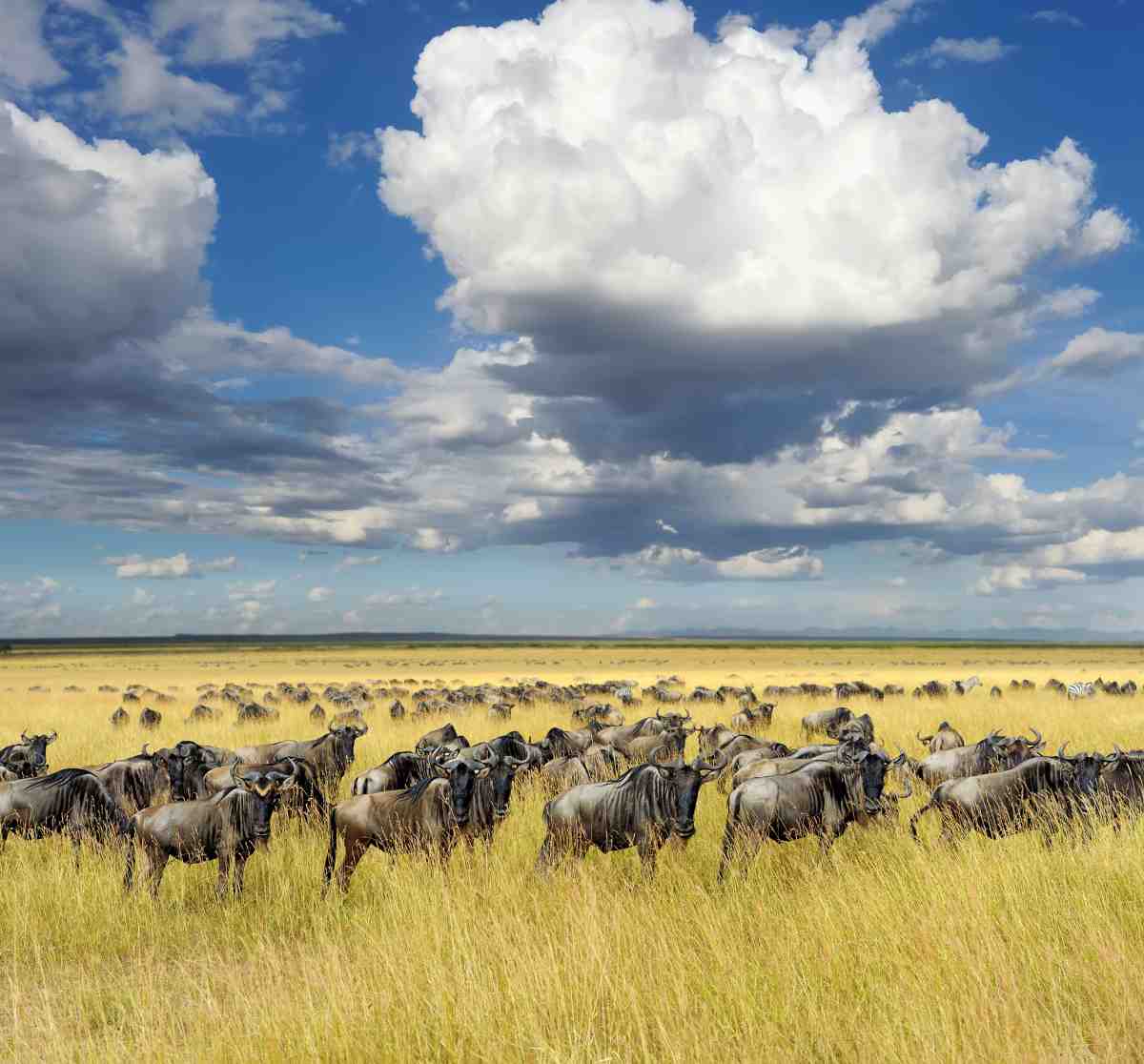
However, the region is best known for the Great Migration: the annual movement of millions of wildebeests, zebras, and gazelles in search of water and grazing land. Each year, a million wildebeests, half a million gazelles, and 200,000 zebras journey from the Serengeti National Park in Tanzania to the Maasai Mara Nature Reserve in Kenya, in a circular, seasonal movement. They are following seasonal rains, which revive lush grasslands and replenish water sources.
For these reasons, the Serengeti National Park and the Maasai Mara Nature Reserve were established to protect this precious wilderness. The Serengeti-Mara ecosystem is one of the most protected ecosystems on Earth – but that does not mean that it is immune to threats.
What issues is the Serengeti facing?
Despite being both well-established and well-protected, the Serengeti faces growing pressures from human activity, including tourism, agriculture, pollution, industry, and poaching. These threats impact both wildlife and local communities, as expanding developments put strain on natural resources, and climate change makes water scarcer.
The Serengeti-Mara ecosystem is being compressed from the outside, particularly by livestock grazing and human settlements. Increased human activity around the buffer zones of the reserves is “squeezing” the wildlife inside by damaging habitats. This can disrupt the migration routes of the herds, thereby changing where the animals graze, and has knock-on effects on the frequency of natural fires, the vegetation structure, and the opportunities for other wildlife to graze.
Additionally, wildlife and habitats are also being impacted by human activity within the ecosystem, such as irresponsible tourism in the Serengeti.
How does tourism in the Serengeti impact the ecosystem?
Thousands of visitors are drawn to the Serengeti each year – and who can blame them? The chance to witness the Great Migration and awe-inspiring landscapes is a bucket-list experience. Tourism offers numerous benefits, including job creation, cultural exchange, and funding for conservation. However, if practiced unsustainably and irresponsibly, it is not without its drawbacks.
Research has revealed that the way wildlife herds move through the ecosystem is changing. Counterintuitively, the herds are avoiding some of the most nutrient-rich areas in the parks. This is explained by the fact that these areas have high tourism development, no doubt because the wildlife used to be so numerous here that companies wanted their accommodation as close as possible to the action.
Essentially, the pressure from tourism in the Serengeti is displacing some of the best grasslands in the region and shrinking the available habitats. Infrastructure development, including the construction of lodges, camps, roads, staff housing, and water sources, competes with prime migration routes. Permanent developments, especially near rivers and waterholes, are particularly harmful.
A recent example is the new Ritz-Carlton hotel, which has been constructed on the Mara River, in a possible path of the wildebeest migration. The hotel has caused protests, and many are calling it a controversial, disruptive, and unnecessary permanent structure. In addition, it is unclear and unlikely whether this new luxury lodge will hire local staff for well-paying jobs and contribute to the local economy. The drawbacks are clear for both wildlife and humans.
Dr. Meitamei Ole Dapash, founder of the Maasai Education, Research and Conservation Institute (MERC), says, “Wildebeest do not cross rivers randomly; they follow ancestral paths. By disrupting these, we’re forcing them into unfamiliar and often dangerous alternatives.”
It has also been shown that the animals are not only changing where they migrate to, but also the time of day. Grazing activity is shifting from daytime to evening, as the wildlife responds to the presence of humans.
Congestion from vehicles used for tourism in the Serengeti is another issue. Safari vehicles often congregate at river crossings in the Serengeti during the Great Migration, sometimes in large numbers. This leads to overcrowding and disruption to the wildlife’s behaviour. Some incidents have involved vehicles blocking paths, forcing animals to take dangerous routes or to enter the river at unsuitable points, creating chaos, stress, and danger for the herds.
The long-term implications are unclear, but this much change in a short period of time puts a lot of pressure on an ecosystem that has evolved to exist in a perfect balance.
What are the solutions?
Part of the solution to protecting and maintaining the ecosystem lies in increasing responsible tourism in the Serengeti. For example, in light of new research, some experts advocate for moving lodges to the edges of the parks or using mobile camps. If the travel industry, both inside and outside the Serengeti, commits to responsible and sustainable tourism, then both humans and wildlife will benefit.
Our trips to the Serengeti
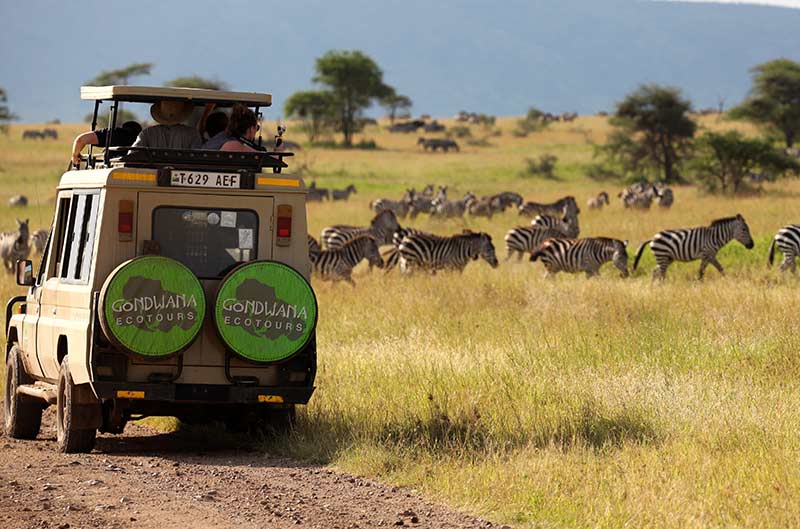
We visit the Serengeti on our Tanzania: Great Migration Safaris. As with each tour Gondwana Ecotours offers, traveling responsibly and sustainably is our top priority.
In Tanzania, we stay at responsible camps, which are either mobile migration camps or low-impact camps that can be removed without harming the environment. These camps are not located by rivers or waterholes, or along direct migration routes, to minimize our impact on wildlife.
We never block river crossings with our safari vehicles during game drives. Over years of guiding visitors to witness the Great Migration, we’ve learned that these crossings are not the best—or safest—places to observe wildlife. Stopping in these areas can disrupt the animals’ natural behavior and create unnecessary stress for both the wildlife and other visitors. Instead, we opt not to visit the Mara River crossings, and make a conscious choice to experience the migration from other parts of Serengeti, where guests can enjoy uninterrupted views while the animals move freely. We believe in responsible travel and are committed to ensuring that our presence does not disrupt the wildlife and ecosystems we visit.
In addition, we support Friends of Serengeti on behalf of every guest. Friends of Serengeti is a nonprofit, and as a member of the organization, we support conservation, education, and benefits to people living within and around the Serengeti. We believe that those who use and benefit from tourism in the Serengeti should give back

Resources
- https://www.gla.ac.uk/news/archiveofnews/2019/march/headline_641633_en.html
- https://www.nathab.com/blog/friends-of-serengeti#:~:text=Serengeti%20means%20“endless%20plains”%20in,Joseph%20Ogutu
- https://www.wwf.org.uk/where-we-work/mau-mara-serengeti#:~:text=The%20Mau%2DMara%2DSerengeti%20is%20a%20large%20area%20in,and%20least%20disturbed%20natural%20environments%20on%20Earth.
- https://www.afar.com/magazine/are-safari-tourists-ruining-east-africas-great-migration
- https://serengetiwatch.org/fos-threats/
- https://www.nbcnews.com/world/africa/ritz-carlton-safari-lodge-threatens-critical-wildlife-corridor-rcna245406
- https://serengetiwatch.org/friends-of-serengeti/