
Pulsating Aurora: The Rhythmic Pre-Dawn Display That Rewards Staying Out Late
Download Travel Details >PRIVATE & SMALL GROUP TOURS TO THE WORLD'S BEST DESTINATIONS
Three Amazing Alaskan Vacations To Choose From!
Summer Trips To Alaska
Grizzlies & Glaciers Tour
Winter Trips To Alaska
See The Northern Lights
Summer Trips To Alaska
Denali Discovery Adventure
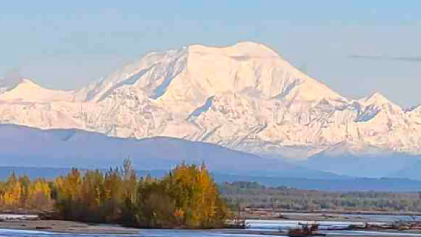

Pulsating Aurora: The Rhythmic, Blinking Form That Rewards Late-Night Persistence
Stay outside long enough on an active aurora night — past the peak substorm phases, into the pre-dawn hours — and you may encounter a form of aurora that behaves quite differently from everything that came before it. Pulsating aurora blinks on and off in rhythmic pulses, illuminating patches of sky for a few seconds before fading, then brightening again. It's one of the less-discussed aurora forms but one of the more scientifically interesting — and for photographers willing to stay out late, a distinctive subject.
What Pulsating Aurora Is
Pulsating aurora is a form of diffuse aurora that blinks on and off with periods typically ranging from a few seconds to several tens of seconds. It appears as patches or broad regions of the sky that brighten and fade rhythmically, sometimes in coordinated patterns across large areas of the ionosphere.
The mechanism is different from the field-aligned current acceleration that drives discrete aurora forms. Pulsating aurora is caused by wave-particle interactions in the magnetosphere — specifically, chorus waves that modulate the precipitation of electrons from the radiation belts into the ionosphere. The periodicity of the pulsations reflects the repetition rate of these wave interactions, which is why pulsating aurora has such a recognizable rhythmic character compared to the more chaotic movement of substorm curtains.
What helped me picture it: imagine a strobe light rather than a steady lamp. Structured aurora during substorm onset is the steady lamp — continuous, bright, intense. Pulsating aurora is the strobe — periodic, rhythmic, covering a broad area with each flash rather than concentrating light in a narrow structure.
When Pulsating Aurora Appears
Pulsating aurora typically appears in the late recovery phase of a substorm sequence — often in the hours before dawn, after the most intense structured activity of the night has passed. It can cover large portions of the sky simultaneously, with different patches pulsating at different phases, creating a complex, shimmering effect across the entire visible aurora region.
Its appearance in the pre-dawn hours means it often goes unobserved by travelers who have gone indoors after the peak substorm phases. This is one of the reasons experienced aurora chasers and photographers advocate for staying outside through quiet periods — the recovery phase activity, including pulsating aurora, can be a reward for persistence that most casual observers miss.
What Pulsating Aurora Means for Travelers
For travelers, pulsating aurora is a bonus phase of an aurora night rather than a replacement for structured activity. If you've already experienced curtains and substorm onset earlier in the evening, pulsating aurora in the pre-dawn hours adds a different kind of visual experience — quieter, more meditative, covering a large area of sky with its rhythmic brightening and fading.
It's worth knowing that pulsating aurora can be difficult to detect with the naked eye, particularly in its subtler manifestations. What appears as a slightly variable sky glow may be clearly rhythmic pulsation when you look at test exposures or video. Cameras are considerably more sensitive to the low-brightness signal of pulsating aurora than dark-adapted eyes. For more on the conditions that produce extended recovery phase activity, see our overview of solar cycles and the northern lights.
What Pulsating Aurora Means for Photographers
Pulsating aurora is one of the better arguments for shooting video or time-lapse alongside still photography during aurora nights. Its defining characteristic — the rhythmic on/off cycle — is essentially invisible in a single still frame, which captures only one phase of the pulse. A time-lapse sequence at 2–5 second intervals reveals the pulsation pattern clearly and produces footage that conveys the behavior in a way stills cannot.
For still photographers, longer exposures during pulsating aurora phases tend to average out the pulses into a smooth glow — similar in appearance to diffuse aurora. Shorter exposures of 2–4 seconds can catch individual bright phases, though the low surface brightness of pulsating aurora often requires higher ISO than the more intense phases of the same night.
Setting an intervalometer to fire continuously through the pre-dawn hours and reviewing the sequence later is often the most efficient approach — letting the camera work while you rest against something warm and wait for the sun to come up.
Return to the full Northern Lights Glossary to continue through the Aurora Visual Forms and Phenomena section.